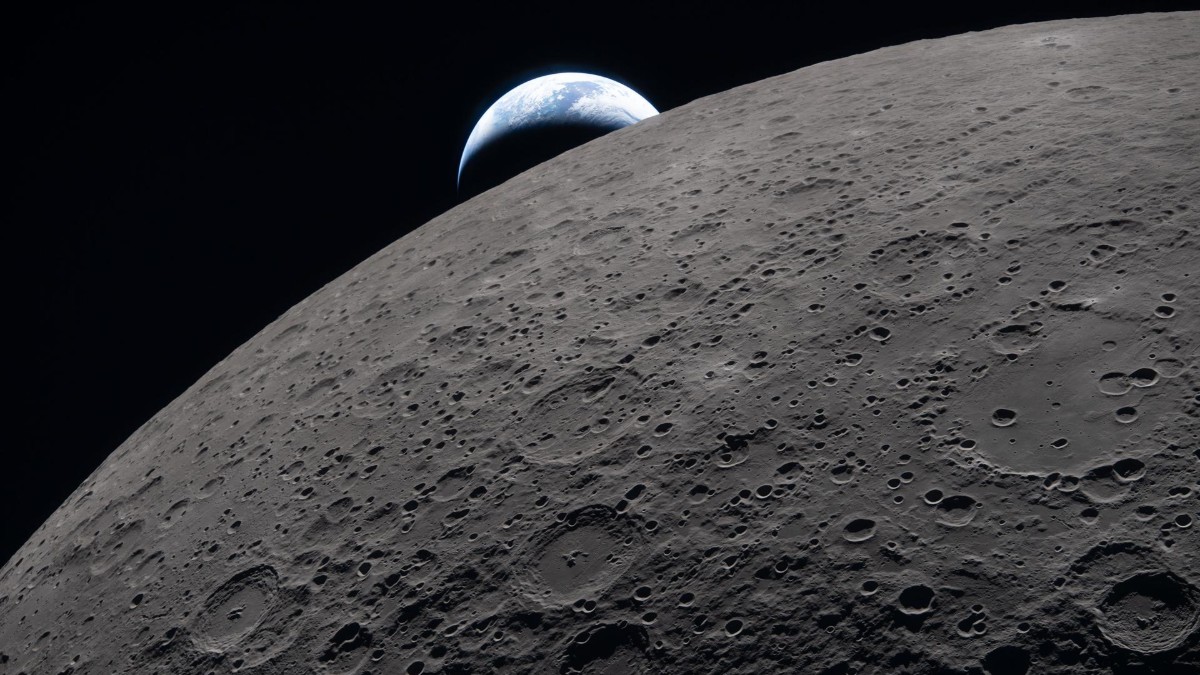
Artemis II Astronauts Return: Historic San Diego Splashdown
The vastness of space met the serene waters of the Pacific Ocean on a historic day, as NASA's Artemis II mission concluded with a triumphant **Artemis Landing San Diego** splashdown. This momentous event marked humanity's eagerly awaited return to lunar exploration, more than half a century after the Apollo era. After a rigorous 10-day test flight circumnavigating the Moon, the Orion spacecraft, named "Integrity," safely delivered its four-person crew back to Earth, precisely off the coast of San Diego. This successful conclusion not only celebrated the resilience and ingenuity of space engineers and astronauts but also solidified San Diego's place in the annals of space exploration.
A Historic Return to Earth's Embrace off San Diego
On April 10, just after 5 p.m. PT (8 p.m. ET), the "Integrity" capsule, having traveled an astounding 700,000 miles, gracefully parachuted into the Pacific Ocean. The precision was breathtaking, with the spacecraft landing less than a mile from its targeted recovery zone off the San Diego coast. Inside were NASA’s seasoned astronauts Reid Wiseman (mission commander), Victor Glover, and Christina Koch, alongside Canadian Space Agency’s Jeremy Hansen. For 10 days, they had pushed farther from Earth than any human in over 50 years, witnessing sights no human eye had seen since Apollo 17. Their journey around the Moon was a critical test of the Orion spacecraft’s systems and a vital stepping stone for future deep-space missions, including the planned lunar landing of Artemis III. The calm waters of the San Diego Pacific provided the perfect, welcoming embrace for these pioneers.
The Fiery Descent: A Test of Engineering and Grit
The return to Earth was anything but gentle. Approaching the planet at an astonishing 24,664 miles per hour – a speed close to the record set by Apollo 10 in 1969 – the Orion capsule transformed into a spectacular, man-made comet. Approximately 4:53 p.m. PT, at 400,000 feet above the Earth, "Integrity" began its fiery penetration of the atmosphere. Twenty minutes prior, it had jettisoned its European-made service module, which had diligently provided propulsion, power, and life support throughout the mission.
The reentry phase is arguably one of the most perilous moments of any space mission. The friction generated as the capsule slammed into Earth's atmosphere created a searing plasma ball around "Integrity," with temperatures soaring to nearly 5,000 degrees Fahrenheit. The crew, already strapped into their orange pressure suits and positioned backward and upside down to ensure the heat shield faced forward, had a unique perspective. As Commander Wiseman remarked in the final minutes before reentry, "We have a great view of the moon out of window two. Looks a little smaller than yesterday."
Central to this survival was Orion’s advanced heat shield. Having experienced unexpected chipping during the uncrewed Artemis I test mission, its performance was under intense scrutiny. This time, it held strong, decelerating the capsule from hypersonic speeds and protecting the crew from the inferno outside. For a deeper dive into the challenges of this critical phase, you can read more at
Artemis II's Fiery San Diego Splashdown: Reentry Risks Explained. The success of the heat shield's performance is a testament to meticulous engineering and crucial for building confidence for future missions carrying humans deeper into space.
Recovery and Reconnection: Stepping Back into Gravity
The moment of splashdown was followed by a swift and coordinated recovery operation. As "Integrity" bobbed gently in the Pacific, divers and medical personnel quickly surrounded the capsule. An inflatable "front porch" was meticulously secured, providing a stable platform for the astronauts’ egress. At 6:31 p.m. PT, the first crew member emerged, blinking in the setting sun, taking a seat on the porch. One by one, they reacquainted themselves with Earth’s gravity, with Commander Wiseman being the last to leave at 6:34 p.m. PT.
Within minutes, the crew members began to be hoisted aboard Navy helicopters, making their way to the recovery ship, the USS John P. Murtha. By 6:58 p.m. PT, all four astronauts were safely aboard, where they were greeted by NASA Administrator Jared Isaacman. Despite having spent more than a week in zero gravity, all four crew members were able to walk under their own power, a remarkable feat and a positive indicator of their health. They were then moved to a medical bay for further assessments, while the "Integrity" capsule itself was prepared to be towed aboard the USS John P. Murtha. This seamless recovery operation, executed with military precision off the San Diego coast, underscored the robust infrastructure supporting deep-space missions. To learn more about their incredible journey from the Moon back to Earth, explore
From the Moon to San Diego: Artemis II Crew Completes Epic Journey.
San Diego's Role in Space Exploration: Beyond the Splashdown
The choice of the Pacific Ocean off San Diego for such a critical splashdown is no coincidence. San Diego's strategic location offers several advantages for NASA's recovery operations. The vast expanse of the Pacific provides ample room for precise targeting and ensures safety from populated areas. The region also benefits from relatively predictable weather patterns, crucial for delicate recovery procedures. Furthermore, San Diego is a major naval port, providing immediate access to the specialized ships, helicopters, and skilled personnel required for open-ocean capsule retrieval. The USS John P. Murtha, an amphibious transport dock ship, is equipped with the necessary facilities for both astronaut medical evaluations and spacecraft retrieval.
This event highlights San Diego's ongoing, albeit often behind-the-scenes, contribution to national space and defense efforts. Beyond splashdowns, the city is a hub for aerospace innovation, with numerous companies and research institutions contributing to the very technologies that make missions like Artemis II possible. The presence of well-established recovery infrastructure and experienced naval teams makes the **Artemis Landing San Diego** an efficient and reliable conclusion point for crewed space missions, offering a crucial logistical advantage for the future of human space exploration. The ability to quickly and safely recover astronauts is paramount, making San Diego a silent but vital partner in humanity's journey to the stars.
The successful **Artemis Landing San Diego** marked an extraordinary milestone, validating the Orion spacecraft's capabilities and preparing the way for future lunar missions. The safe return of Reid Wiseman, Victor Glover, Christina Koch, and Jeremy Hansen, after their awe-inspiring journey around the Moon, signifies a new era of human space exploration. San Diego, with its ideal coastal conditions and robust recovery infrastructure, played a pivotal role in ensuring this historic mission concluded with triumph. As NASA looks toward sending humans back to the lunar surface and eventually to Mars, the lessons learned and the successes celebrated from Artemis II's splashdown off San Diego will undoubtedly propel humanity further into the cosmos.